
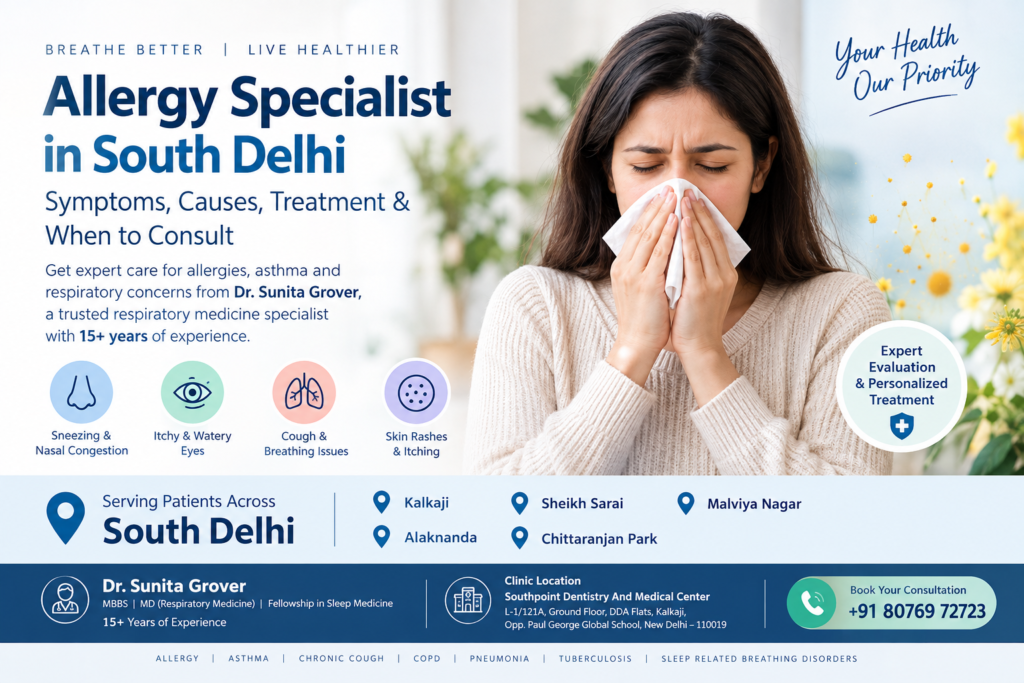
If you are looking for an Allergy specialist in South Delhi for recurring sneezing, nasal congestion, itchy eyes, chronic cough, wheezing or breathing discomfort, a proper medical evaluation can help determine whether your symptoms may be related to an allergy, asthma or another respiratory condition.
Allergy symptoms can vary from mild nasal irritation to recurring respiratory complaints that affect sleep, work and everyday activities. Understanding the possible cause, identifying triggers and receiving appropriate medical guidance can help in managing persistent symptoms.
Dr. Sunita Grover is a respiratory medicine specialist with 15+ years of experience. Her clinical areas include asthma, respiratory allergy concerns, chronic cough, COPD, pneumonia, tuberculosis and sleep-related breathing conditions. Her approach focuses on understanding each patient’s symptoms, medical history and individual clinical needs.
What Is an Allergy?
An allergy occurs when the immune system reacts to a substance that is generally harmless to most people. These substances are called allergens.
Common allergens may include dust mites, pollen, mould, pet dander and certain environmental substances. Depending on the individual, exposure may lead to symptoms involving the nose, eyes, skin or respiratory system.
An allergic reaction does not look the same in every person. Some people may primarily experience sneezing and nasal congestion, while others may have coughing, wheezing or other respiratory symptoms.
Because several medical conditions can cause similar symptoms, persistent or recurring complaints should be clinically evaluated.
Common Allergy Symptoms
Allergy symptoms may include:
- Frequent sneezing
- Runny or blocked nose
- Itchy nose or throat
- Watery or itchy eyes
- Nasal congestion
- Recurrent cough
- Wheezing
- Breathing discomfort
- Skin itching or rashes
- Symptoms that become worse after exposure to dust, pollen or other suspected triggers
If symptoms repeatedly interfere with sleep, exercise, work or daily activities, professional evaluation may be appropriate.
What Causes Allergy Symptoms?
The underlying cause of an allergy is an immune-system response to a specific allergen. However, the factors that cause symptoms to appear or become worse can differ between individuals.
Genetic susceptibility, environmental exposure and repeated contact with particular allergens can influence how a person experiences allergy symptoms.
For example, a person may develop symptoms after spending time in a dusty environment, during a particular season or after exposure to pet dander. Identifying these patterns can be useful during a medical consultation.
It is also important to distinguish between an allergy cause and an allergy trigger. The allergic response involves the immune system, while a trigger is the specific exposure that may bring on or worsen symptoms.
Common Allergy Triggers
| Possible Trigger | Symptoms That May Occur |
|---|---|
| Dust and dust mites | Sneezing, nasal congestion, itchy eyes or cough |
| Pollen | Seasonal sneezing, runny nose and watery eyes |
| Pet dander | Nasal irritation, coughing or respiratory discomfort |
| Mould | Sneezing, nasal symptoms or cough |
| Smoke and air pollutants | Throat irritation, cough or breathing difficulty |
| Seasonal changes | Increased nasal or respiratory symptoms in some people |
Not everyone reacts to the same trigger. Keeping a simple record of when symptoms occur and what you were exposed to can help your doctor understand your symptom pattern.
Allergy, Asthma and Respiratory Symptoms
Allergy and asthma can sometimes be associated with each other, but they are not the same condition.
Allergies commonly cause symptoms such as sneezing, runny nose, nasal congestion and itchy or watery eyes. Asthma primarily affects the airways and may cause symptoms such as wheezing, coughing, chest tightness or shortness of breath.
Some allergens or environmental exposures can be associated with asthma symptoms in susceptible individuals.
This is why recurring cough, wheezing or breathing difficulty should not automatically be considered an allergy. A respiratory specialist can assess the symptoms and determine whether further evaluation is appropriate.
When Should You See an Allergy Specialist?
Consider consulting an allergy or respiratory specialist when symptoms are:
- Persistent or repeatedly returning
- Affecting sleep or daily activities
- Triggered by specific environments or seasons
- Associated with recurring cough or wheezing
- Affecting exercise or physical activity
- Not improving after avoiding suspected triggers
- Accompanied by unexplained breathing discomfort
A consultation generally begins with a detailed discussion of your symptoms and medical history. Depending on the clinical situation, your doctor may recommend additional evaluation or testing.
How Are Allergy-Related Respiratory Problems Evaluated?
Evaluation depends on the symptoms and individual medical history.
A consultation may involve:
1. Understanding your symptoms
The doctor may ask about the type, frequency, duration and severity of your symptoms.
2. Identifying possible triggers
Environmental exposure, seasonal patterns, dust, smoke, pets and other possible triggers may be discussed.
3. Reviewing medical history
Previous allergies, asthma, respiratory conditions and treatments may be relevant.
4. Clinical assessment
A physical and respiratory assessment may be performed when appropriate.
5. Further testing when indicated
Depending on the symptoms and clinical findings, additional investigations may be recommended.
The appropriate evaluation varies from person to person, so testing should be guided by a qualified medical professional.
Allergy Treatment and Management
Allergy treatment depends on the underlying condition, symptoms and individual clinical needs. There is no single treatment that is appropriate for everyone.
Management may include:
- Identifying and reducing exposure to relevant triggers
- Environmental control measures
- Medicines for allergy symptoms when clinically appropriate
- Treatment for asthma when asthma is diagnosed
- Inhaled medicines for appropriate respiratory conditions
- Allergy testing when medically indicated
- Specialist-directed treatment based on the diagnosis
Avoid starting or changing prescription medicines without appropriate medical advice, particularly when symptoms involve breathing difficulty.
The goal of treatment is to understand the underlying problem, manage symptoms appropriately and reduce their impact on everyday life.
Allergy Specialist in South Delhi
For people searching for an Allergy specialist in South Delhi, it is useful to choose a doctor with relevant experience in respiratory and allergy-related concerns, particularly when symptoms include recurrent cough, wheezing or breathing difficulty.
Dr. Sunita Grover is a respiratory medicine specialist with more than 15 years of experience. She completed her MBBS from Sawai Mansingh Medical College, Jaipur, and MD in Respiratory Medicine from Government Medical College, Kota. She has also completed a Fellowship in Sleep Medicine from the Indian Society for Sleep Research (ISSR) and a certificate course in Respiratory Allergy, Diagnosis and Management from Vallabhbhai Patel Chest Institute, Delhi.
Her clinical practice includes respiratory allergy, asthma, chronic cough and other respiratory conditions.
Allergy Specialist in Kalkaji
If you are searching for an Allergy specialist in Kalkaji, recurring sneezing, nasal congestion, itchy eyes, cough or breathing-related symptoms can be discussed during a medical consultation.
Dr. Sunita Grover provides consultations at Southpoint Dentistry And Medical Center in Kalkaji, New Delhi. A consultation can help assess whether symptoms may be related to allergies, asthma or another respiratory concern.
Allergy Specialist in Sheikh Sarai
Patients looking for an Allergy specialist in Sheikh Sarai may consider medical evaluation when symptoms continue despite avoiding suspected triggers.
Recurring nasal symptoms, cough, wheezing or breathing discomfort can have different causes. A detailed clinical assessment can help determine the appropriate next step.
Allergy Specialist in Malviya Nagar
If you are searching for an Allergy specialist in Malviya Nagar, recurring symptoms that interfere with sleep, exercise or daily activities may require professional evaluation.
Before your appointment, note when your symptoms occur and whether they are associated with dust, seasonal changes, smoke, pets or other environmental exposures.
Allergy Specialist in Alaknanda
People searching for an Allergy specialist in Alaknanda can benefit from keeping a record of possible allergy triggers and symptom patterns.
Information about when symptoms start, how long they last and whether they improve after leaving a particular environment can provide useful context during a consultation.
Allergy Specialist in Chittaranjan Park
If you are looking for an Allergy specialist in Chittaranjan Park, consider professional evaluation when symptoms are recurrent, unexplained or affecting your quality of life.
Persistent cough, wheezing or breathlessness should not automatically be attributed to allergies because several respiratory conditions may produce similar symptoms.
Why Choose Dr. Sunita Grover for Allergy & Respiratory Care?
Dr. Sunita Grover brings 15+ years of experience in respiratory medicine and focuses on individualized evaluation and treatment planning.
Her qualifications and clinical training include:
- MBBS – Sawai Mansingh Medical College, Jaipur
- MD – Respiratory Medicine, Government Medical College, Kota
- Fellowship in Sleep Medicine – Indian Society for Sleep Research
- Certificate course in Respiratory Allergy, Diagnosis and Management – Vallabhbhai Patel Chest Institute, Delhi
Her areas of clinical care include asthma, respiratory allergies, chronic cough, COPD, pneumonia, tuberculosis and sleep-related breathing disorders.
The consultation focuses on understanding the patient’s symptoms, relevant medical history, possible contributing factors and appropriate next steps.
Get Allergy & Respiratory Care in South Delhi
Recurring allergy symptoms can affect your sleep, comfort, work and everyday activities. If you experience frequent sneezing, nasal congestion, itchy eyes, recurrent cough, wheezing or breathing discomfort, professional evaluation can help identify the possible cause and appropriate next steps.