
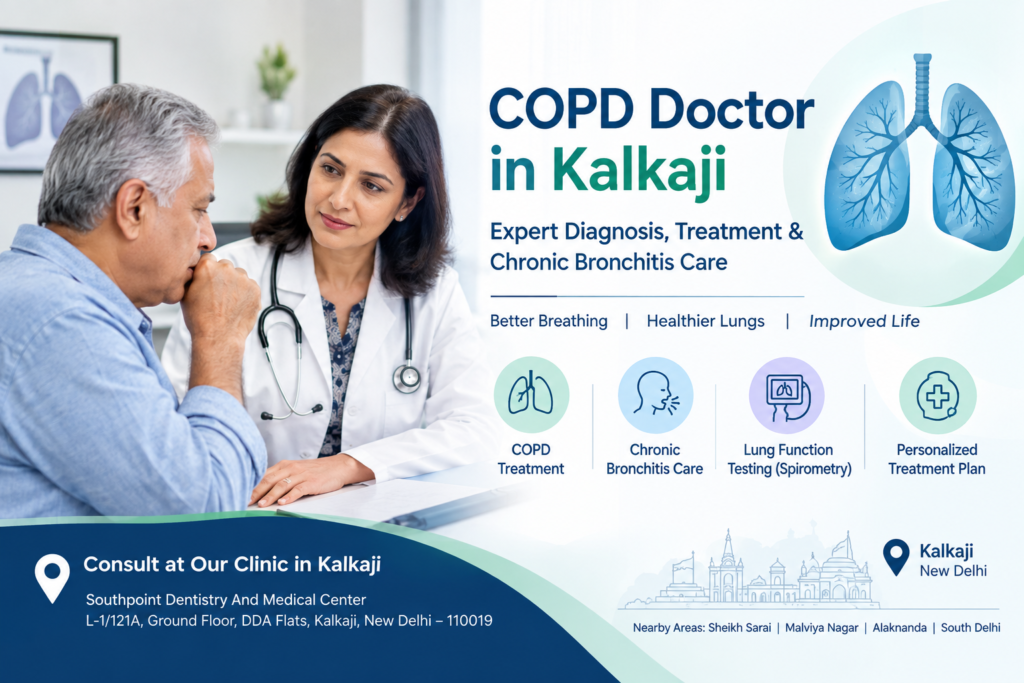
If ongoing breathing problems are affecting your daily routine, a COPD consultation in South Delhi can help you understand your symptoms and determine whether further respiratory evaluation is needed. Persistent cough, mucus production, breathlessness, wheezing, or reduced stamina can sometimes make routine activities such as walking, climbing stairs, exercising, or working more difficult.
A respiratory consultation is not only about identifying COPD. It also allows a doctor to understand your symptoms, medical history, lifestyle, previous respiratory problems, and possible smoking or environmental exposures. This information can help determine what type of evaluation or management may be appropriate for your individual condition.
When Should You Consider a COPD Consultation in South Delhi?
Breathing difficulties can have several possible causes, so experiencing one symptom does not automatically mean that you have COPD. However, symptoms that continue, repeatedly return, or gradually affect your normal activities should be discussed with a qualified respiratory doctor.
You may consider a consultation if you experience:
- Breathlessness during normal physical activity
- A cough that persists or repeatedly returns
- Regular mucus or phlegm production
- Recurrent wheezing
- Difficulty walking the same distance as before
- Needing frequent breaks during routine activities
- Repeated respiratory problems
- A gradual reduction in physical stamina
Keeping track of when symptoms occur and how they affect your routine can provide useful information during your appointment.
How Can Breathing Problems Affect Daily Life?
Respiratory symptoms do not always appear suddenly. Some people gradually change their daily habits because activities that were previously comfortable begin to require more effort.
You may notice that you:
- Avoid climbing stairs
- Walk more slowly than before
- Take frequent breaks while doing household work
- Avoid exercise because of breathlessness
- Feel unusually tired after normal activities
- Need more time to complete routine tasks
These changes are important to mention during a consultation. They help a doctor understand not only what symptoms you have, but also how those symptoms are affecting your daily activities.
What Happens During a COPD Consultation in South Delhi?
A respiratory consultation generally starts with a detailed discussion about your current symptoms and medical history. The exact evaluation depends on your individual situation.
1. Discussing Your Current Symptoms
Your doctor may ask when your symptoms began, how frequently they occur, and whether they are improving, staying the same, or becoming more noticeable.
Information about cough, mucus, breathlessness, wheezing, and activity tolerance can help provide a clearer picture of your respiratory concerns.
2. Reviewing Your Medical History
Previous respiratory infections, asthma, allergies, hospital visits, medications, and other relevant medical conditions may be discussed.
If you have previously undergone respiratory investigations, carrying those reports can help the doctor review your previous evaluation.
3. Understanding Smoking and Environmental Exposure
Smoking history and exposure to second-hand smoke can be important during respiratory assessment. Your doctor may also ask about workplace dust, fumes, chemicals, air pollution, or household smoke exposure.
This information can help identify factors that may be relevant to your respiratory health.
4. Deciding on Further Evaluation
Depending on your symptoms and clinical assessment, the doctor may recommend lung-function testing or other investigations.
Not every patient requires the same tests. The appropriate evaluation depends on the individual’s symptoms, history, examination findings, and clinical situation.
What Should You Bring to Your Consultation?
Preparing a few details before your appointment can make the consultation more useful.
Consider bringing:
- Previous lung-function reports
- Chest X-ray or other imaging reports
- Current medication details
- Previous respiratory prescriptions
- Information about previous hospital visits
- A list of symptoms and when they started
- Details about smoking or environmental exposure
You can also note whether your symptoms become worse during exercise, at night, during certain seasons, or after exposure to dust, smoke, or other irritants.
Why Is Follow-Up Important?
For people diagnosed with COPD or another chronic respiratory condition, one appointment may not be the end of the management process.
Follow-up can help assess whether symptoms are changing and whether the current management approach remains appropriate.
During follow-up, a respiratory doctor may review:
- Changes in breathlessness
- Cough and mucus production
- Ability to perform daily activities
- Episodes of worsening symptoms
- Response to prescribed treatment
- Changes in environmental or lifestyle exposure
- Whether additional evaluation is required
The frequency of follow-up depends on the patient’s condition and clinical needs.
Understanding COPD and Chronic Bronchitis
COPD and chronic bronchitis are related but are not identical terms.
COPD involves persistent airflow limitation, while chronic bronchitis describes a pattern of long-term productive cough. Chronic bronchitis can occur alongside COPD, but having chronic bronchitis does not by itself establish a COPD diagnosis.
This distinction is one reason why persistent respiratory symptoms should be properly evaluated instead of being self-diagnosed.
When Can a COPD Flare-Up Need Prompt Attention?
People with chronic respiratory conditions may experience periods when their usual symptoms become noticeably worse.
Changes that should be taken seriously can include:
- Breathlessness that is significantly worse than usual
- A noticeable increase in coughing
- Increased mucus production
- Changes in mucus
- Increased wheezing
- Difficulty carrying out normal activities
Severe or rapidly worsening breathing difficulty requires prompt medical attention. If breathing becomes seriously difficult, do not wait for a routine consultation.
COPD and Chronic Bronchitis Clinic in Alaknanda
People searching for a COPD and chronic bronchitis clinic in Alaknanda may also consider respiratory care options in nearby South Delhi locations. Patients from Alaknanda and other South Delhi neighbourhoods can consider respiratory consultation in Kalkaji based on their healthcare needs.
Dr. Sunita Grover provides respiratory medicine consultations at Southpoint Dentistry And Medical Center in Kalkaji. Her clinical areas include COPD, chronic bronchitis, chronic cough, asthma, pneumonia, tuberculosis, sleep apnea, and other respiratory conditions.
Why Choose Dr. Sunita Grover for Respiratory Care?
Dr. Sunita Grover has 15+ years of experience in respiratory medicine. She completed her MBBS from Sawai Mansingh Medical College, Jaipur, followed by an MD in Respiratory Medicine from Government Medical College, Kota. She has also completed a Fellowship in Sleep Medicine from the Indian Society for Sleep Research.
Her approach focuses on understanding the patient’s symptoms, medical history, and individual circumstances before discussing appropriate evaluation and management.
Clinic Location in South Delhi
Southpoint Dentistry And Medical Center
L-1/121A, Ground Floor, DDA Flats, Kalkaji, Opp. Paul George Global School, New Delhi – 110019
For appointment enquiries:
+91 80769 72723
Patients from Kalkaji, Alaknanda, C.R. Park, Malviya Nagar, Sheikh Sarai, and nearby South Delhi areas can discuss persistent respiratory symptoms and determine whether a respiratory evaluation is appropriate.
Frequently Asked Questions
When should I consider a COPD consultation in South Delhi?
Consider a consultation when cough, mucus production, breathlessness, or wheezing persists, repeatedly returns, or begins affecting your normal activities.
What happens during a COPD consultation?
The doctor may review your symptoms, medical history, smoking or environmental exposure, previous reports, and daily activity limitations before deciding whether further evaluation is needed.
Should I bring previous medical reports?
Yes. Previous lung-function tests, imaging reports, prescriptions, and relevant medical records can help the doctor understand your previous evaluation.
Can breathlessness have causes other than COPD?
Yes. Breathlessness can occur with several respiratory and medical conditions. A clinical evaluation is needed to understand the underlying cause.
Is chronic bronchitis the same as COPD?
No. Chronic bronchitis and COPD are related but different clinical terms. Chronic bronchitis refers to a pattern of long-term productive cough, while COPD involves persistent airflow limitation.
Can people with COPD need regular follow-up?
Some people with COPD require ongoing follow-up to monitor symptoms, treatment response, and changes in respiratory health. The follow-up schedule depends on the individual’s condition.
Take the Next Step for Your Respiratory Health
Persistent cough, mucus production, breathlessness, or reduced physical stamina should not automatically be dismissed as normal ageing or everyday tiredness. These symptoms can have different causes and may require appropriate respiratory assessment.
If your breathing symptoms are persistent, repeatedly returning, or affecting your daily activities, discussing them with a qualified respiratory medicine doctor can help you understand the appropriate next step.