
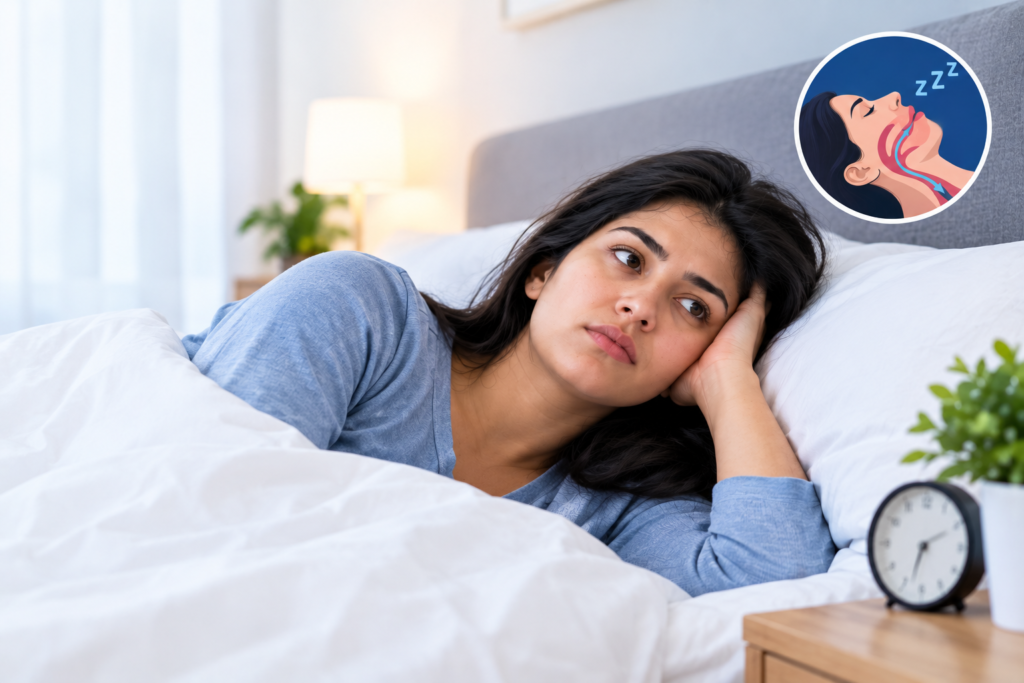
Do you wake up feeling tired even after getting enough sleep? Do you experience morning headaches, difficulty concentrating, or frequent awakenings during the night? These symptoms may have several causes, but in some women, they can be associated with sleep apnea, a sleep-related breathing disorder that can affect sleep quality and daytime well-being.
Recognising the sleep apnea symptoms in women is important because the condition does not always cause loud snoring. Some women experience persistent fatigue, insomnia, mood changes, and unrefreshing sleep without realising that their breathing may be interrupted during the night.
For women living in South Delhi, understanding these warning signs can help them decide when to consult a qualified respiratory or sleep medicine specialist.
What Is Sleep Apnea?
Sleep apnea is a condition in which breathing repeatedly stops and starts during sleep. The most common type, obstructive sleep apnea (OSA), occurs when the upper airway becomes narrowed or blocked during sleep.
These interruptions can disturb normal sleep and may contribute to daytime sleepiness, headaches, poor concentration, and other health concerns.
Sleep apnea can affect both men and women. However, women may experience symptoms that overlap with insomnia, hormonal changes, and everyday fatigue, making the condition more difficult to recognise.
7 Sleep Apnea Symptoms in Women to Watch For
1. Persistent Daytime Fatigue
Feeling tired despite spending sufficient time in bed is one possible sign of sleep apnea. Repeated interruptions in breathing can fragment sleep and leave you feeling unrefreshed in the morning.
You may struggle to concentrate at work, feel sleepy during the day, or lack energy for routine activities. Persistent fatigue can also have other causes, so it is important to consider your overall symptoms.
2. Morning Headaches
Some women with sleep apnea experience headaches after waking up. These may improve as the day progresses, although morning headaches can also be associated with migraine, dehydration, and other conditions.
If you frequently wake up with headaches alongside snoring, gasping, or daytime sleepiness, consider discussing these symptoms with a healthcare professional.
3. Insomnia and Frequent Night-Time Awakenings
Sleep apnea does not always present as obvious breathing difficulties. Some women report difficulty falling asleep, waking repeatedly during the night, or struggling to return to sleep.
These problems may be related to several conditions, including stress, menopause-related sleep changes, and other sleep disorders. A medical assessment can help identify the possible cause.
4. Snoring, Gasping, or Pauses in Breathing
Loud, frequent snoring is a recognised warning sign of obstructive sleep apnea. Other symptoms include waking up choking or gasping and having a partner notice pauses in breathing.
However, women can have sleep apnea without prominent snoring. The absence of loud snoring does not rule out the condition.
5. Difficulty Concentrating or Remembering Things
Poor-quality sleep may affect memory, attention, and mental alertness. You might find it difficult to focus on work, remember everyday tasks, or remain attentive during conversations.
Although sleep apnea can contribute to these problems, other medical and lifestyle factors can also cause them.
6. Mood Changes and Irritability
Some women with sleep apnea report irritability, anxiety, or low mood alongside disrupted sleep. Poor sleep can affect emotional well-being, but these symptoms alone cannot establish a diagnosis.
If mood changes persist or interfere with daily life, seek appropriate medical advice.
7. Sleep Problems During Menopause
The risk of obstructive sleep apnea increases during and after menopause. Hormonal and physical changes may influence breathing during sleep, while hot flashes and insomnia can make sleep problems more complicated.
Women experiencing persistent fatigue, snoring, morning headaches, or repeated night-time awakenings during menopause should discuss their symptoms with a healthcare professional.
Who Is at Risk of Sleep Apnea?
Sleep apnea can affect women of different ages and body types. Factors associated with increased risk include:
- Increasing age and menopause.
- Excess body weight, where relevant.
- Certain anatomical features affecting the upper airway.
- A family history of sleep apnea.
- Some medical conditions that affect breathing or sleep.
Having one or more risk factors does not mean that you definitely have sleep apnea. Equally, women without these risk factors can develop the condition.
How Is Sleep Apnea Diagnosed?
If you experience persistent sleep-related symptoms, a qualified healthcare professional can review your medical history, sleep habits, and symptoms.
They may ask whether you snore, wake up gasping, experience morning headaches, or feel excessively sleepy during the day.
If sleep apnea is suspected, a sleep study may be recommended. Depending on your circumstances, testing may be performed at home with an appropriate monitoring device or in a sleep laboratory.
A sleep study evaluates breathing patterns during sleep and helps determine whether sleep apnea is present. Symptoms alone are not enough to confirm the diagnosis.
Sleep Apnea Treatment Options
Treatment depends on the diagnosis, severity, medical history, and individual needs. Options may include:
- CPAP therapy: A device delivers pressurised air through a mask to help keep the airway open during sleep.
- Lifestyle measures: A clinician may recommend appropriate physical activity, weight management where relevant, or changes to certain habits.
- Oral appliances: Selected patients may benefit from a professionally fitted device that helps maintain an open airway.
- Other treatments: Additional procedures or treatment approaches may be considered in specific cases.
Women in South Delhi who experience persistent sleep-related breathing problems can seek an assessment from a qualified respiratory or sleep medicine professional. The appropriate treatment should be based on an individual evaluation rather than symptoms alone.
When Should You Consult a Sleep Specialist in South Delhi?
Consider seeking medical advice if you regularly experience unexplained daytime fatigue, morning headaches, repeated awakenings, or unrefreshing sleep.
It is particularly important to seek assessment if someone notices repeated pauses in your breathing while you sleep or if you frequently wake up gasping.
If you feel sleepy while driving, do not drive until it is safe to do so.
Early assessment can help identify the cause of your symptoms and determine whether treatment is necessary.
Frequently Asked Questions
1. What are the most common sleep apnea symptoms in women?
Possible symptoms include daytime fatigue, morning headaches, insomnia, difficulty concentrating, snoring, and waking up gasping. Not every woman experiences the same symptoms.
2. Can women have sleep apnea without snoring?
Yes. Some women experience sleep apnea without prominent snoring. Persistent fatigue, unrefreshing sleep, and repeated awakenings may also warrant medical assessment.
3. Does menopause increase the risk of sleep apnea?
The risk of obstructive sleep apnea increases during and after menopause. However, not every woman experiencing menopause develops the condition.
4. How is sleep apnea diagnosed?
A healthcare professional evaluates your symptoms and may recommend a sleep study to assess breathing during sleep.
5. Is sleep apnea treatable?
Yes. Depending on the diagnosis, treatment may include CPAP therapy, selected oral appliances, lifestyle measures, or other medical interventions.
Conclusion
Recognising sleep apnea symptoms in women can help you understand why you may be experiencing persistent tiredness, morning headaches, or disrupted sleep. These symptoms do not automatically mean that you have sleep apnea, but ongoing problems deserve appropriate attention.
If you live in South Delhi and regularly experience symptoms associated with disrupted breathing during sleep, consult a qualified healthcare professional to discuss whether a sleep assessment is appropriate.