
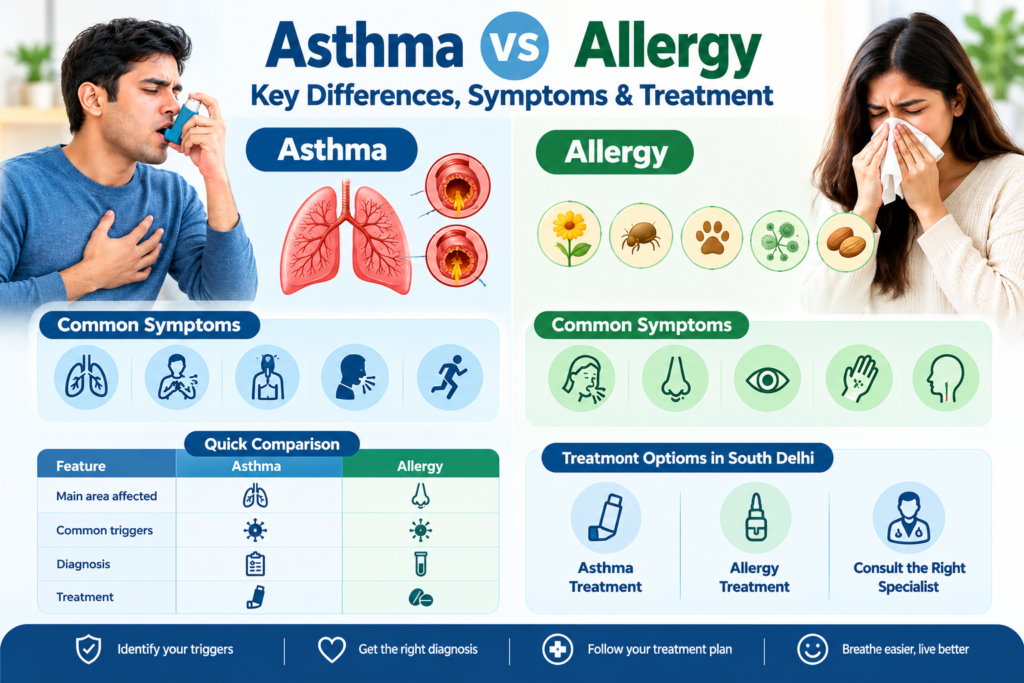
Asthma vs Allergy: Asthma and allergies are common conditions that can affect your breathing, sleep and daily activities. Although both may cause coughing, congestion and breathing discomfort, they are not the same condition. Understanding their symptoms, triggers and treatment options can help you recognise when to seek medical advice. If you experience recurring respiratory or allergic symptoms, Asthma treatment in South Delhi may be an appropriate local search when looking for a qualified healthcare professional to assess your condition and recommend suitable care.
What Is Asthma?
Asthma is a chronic condition that affects the airways in the lungs. During an asthma episode, the airways can become inflamed and narrow, sometimes producing excess mucus. This makes it harder for air to move in and out of the lungs.
Common asthma triggers include dust mites, pollen, smoke, air pollution, respiratory infections, cold air and physical activity. Triggers vary from person to person, and not every person with asthma has allergies.
Common Symptoms of Asthma
- Wheezing, particularly when breathing out
- Shortness of breath
- Chest tightness or discomfort
- Repeated coughing, especially at night or early morning
- Breathing difficulties during exercise
Symptoms may come and go. Repeated night-time coughing, worsening wheezing or difficulty performing everyday activities should be assessed by a healthcare professional.
What Is an Allergy?
An allergy occurs when the immune system reacts to a substance that is usually harmless. These substances, called allergens, may include pollen, dust mites, mould, pet dander and certain foods.
Allergies can affect different parts of the body. For example, allergic rhinitis affects the nose, while allergic conjunctivitis affects the eyes. Some allergic reactions can also cause skin symptoms or more serious reactions.
Common Symptoms of Allergies
- Frequent sneezing
- Runny or blocked nose
- Itchy, red or watery eyes
- Itchy skin or rashes
- Nasal congestion and throat irritation
Unlike asthma, which primarily affects the lower airways, common nasal allergies mainly affect the upper respiratory tract.
Asthma vs Allergy: Key Differences
The main difference between asthma and allergies is the part of the body affected and how the condition develops. Asthma affects the airways in the lungs, whereas allergies involve an immune response to particular substances.
| Feature | Asthma | Allergy |
|---|---|---|
| Main area affected | Airways and lungs | Nose, eyes, skin or other organs |
| Typical symptoms | Wheezing, breathlessness, chest tightness and cough | Sneezing, itching, watery eyes and runny nose |
| Common triggers | Allergens, smoke, exercise, cold air and infections | Pollen, dust mites, mould and pet dander |
| Diagnosis | Medical assessment and lung function testing when appropriate | Medical assessment and selected allergy tests |
| Management | Prescribed asthma medicines and trigger management | Allergen avoidance and appropriate allergy treatments |
Asthma and allergies can occur together, but one does not automatically mean that a person has the other.
Can Allergies Cause Asthma?
Allergies can trigger asthma symptoms in people with allergic asthma. When an affected person encounters an allergen, the resulting airway inflammation can contribute to wheezing, coughing and breathlessness.
However, not everyone with allergies develops asthma. Asthma can also be triggered by exercise, respiratory infections, smoke and cold air.
Identifying personal triggers and following a clinician-recommended treatment plan can help reduce flare-ups. Avoiding known triggers may be useful, but it should not replace prescribed medication.
How Are Asthma and Allergies Diagnosed?
Accurate diagnosis is important because other respiratory conditions can produce symptoms similar to asthma and allergies.
A healthcare professional may review your symptoms, medical history, family history and exposure to potential triggers. Depending on the findings, they may recommend:
- Spirometry: Measures how much air you can breathe out and how quickly, helping assess lung function.
- Allergy skin testing: Helps identify reactions to selected allergens.
- Specific IgE blood tests: May help identify sensitisation to particular allergens when clinically indicated.
Not every patient requires every test. The appropriate investigations depend on symptoms and clinical assessment.
Asthma Treatment in South Delhi: Available Approaches
Asthma management depends on symptom frequency, severity, individual triggers and treatment response. A clinician may recommend inhaled medicines to control airway inflammation and provide symptom relief according to an appropriate treatment plan.
Patients should use their prescribed medication as directed and attend follow-up appointments. Avoid changing or stopping treatment without medical advice.
Reducing exposure to tobacco smoke, recognising personal triggers and following a written asthma action plan can also support asthma management. If you experience recurrent wheezing, night-time coughing or breathlessness, arrange a medical assessment.
Allergy Treatment in South Delhi: Managing Allergic Symptoms
Allergy treatment depends on the allergen and the body part affected. Management may include reducing exposure to known triggers, saline nasal rinses where appropriate, antihistamines or nasal sprays recommended by a healthcare professional.
Selected patients with confirmed allergies may benefit from allergen immunotherapy following specialist assessment.
For people living or working in South Delhi, keeping track of when symptoms worsen and whether they occur indoors or outdoors can help identify possible triggers. However, symptoms alone cannot establish the cause, and treatment should be based on appropriate clinical evaluation.
When Should You Consult a Doctor?
Seek medical advice if you experience persistent nasal congestion, repeated sneezing, a recurring cough, wheezing or unexplained breathing difficulties.
When looking for the best asthma doctor in South Delhi or the best allergy doctor in South Delhi, consider the professional’s relevant qualifications, clinical experience, approach to diagnosis and ability to explain treatment options clearly.
A pulmonologist can evaluate asthma and other lung conditions. An allergy specialist can investigate suspected allergic triggers. The most appropriate professional depends on your symptoms and medical history.
Seek emergency medical care if you experience severe breathing difficulty, cannot speak in full sentences because of breathlessness, develop blue or grey lips, or have rapidly worsening symptoms.
Frequently Asked Questions
1. Is asthma the same as an allergy?
No. Asthma is a condition affecting the airways in the lungs, while an allergy is an immune response to a particular substance. Allergies can trigger asthma in some people.
2. Can allergies cause coughing and breathing problems?
Yes. Allergies can contribute to coughing through nasal irritation or drainage. In people with allergic asthma, exposure to an allergen may also cause wheezing, chest tightness and breathlessness.
3. Which doctor should I consult for asthma and allergies?
A pulmonologist can assess asthma and other respiratory conditions. An allergy specialist can investigate suspected allergic reactions. Your symptoms and clinical history help determine which assessment is appropriate.
4. Can asthma and allergies be managed together?
Yes. When both conditions are present, a healthcare professional can create a treatment plan addressing asthma control and relevant allergic triggers.
5. Can asthma be cured permanently?
Asthma is generally a long-term condition, but appropriate treatment can help control symptoms and reduce the risk of attacks. Treatment needs vary, so regular medical review is important.
Conclusion
Asthma and allergies can share symptoms, but they affect the body differently and may require different treatment approaches. Recognising the differences, identifying potential triggers and obtaining an accurate diagnosis are important steps towards better respiratory health.
If you experience recurring allergy symptoms, persistent coughing or breathing difficulties, consult a qualified healthcare professional for personalised advice. Appropriate assessment and treatment can help you manage symptoms and maintain your quality of life.