
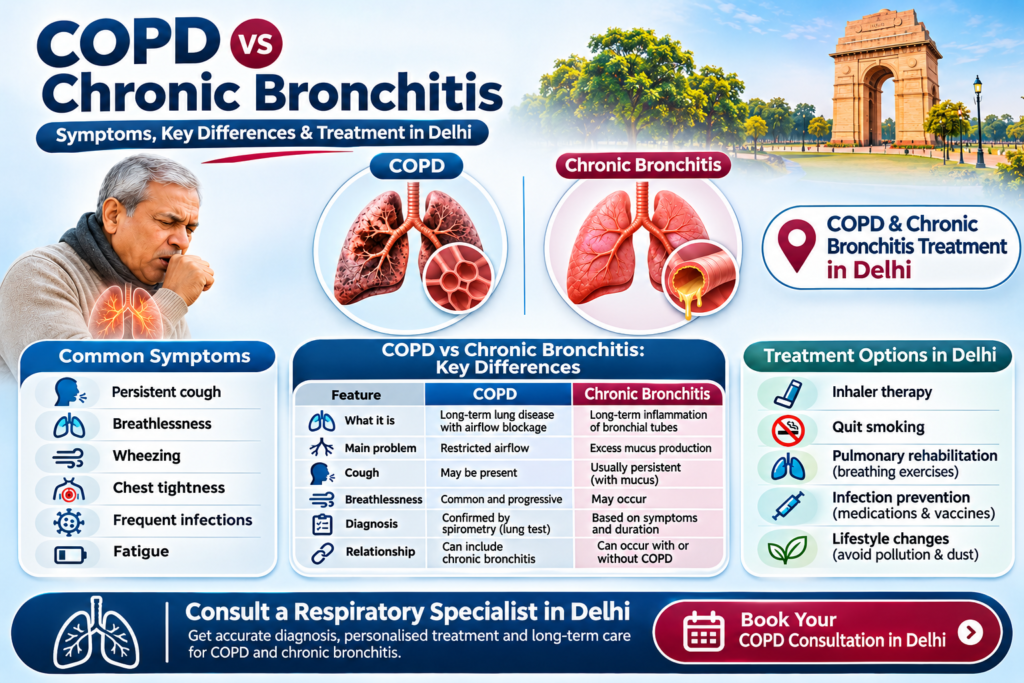
A persistent cough, excessive mucus, wheezing or difficulty breathing can be more than just seasonal respiratory problems. These symptoms may indicate an underlying lung condition that requires proper medical attention. Two commonly confused respiratory conditions are Chronic Obstructive Pulmonary Disease (COPD) and chronic bronchitis.
Although both conditions affect the airways and can cause similar symptoms, they are medically different. Understanding their causes, warning signs and treatment options can help patients make informed decisions about their respiratory health.
For people experiencing ongoing breathing difficulties, timely medical evaluation is important. Seeking a COPD consultation in Delhi can help identify the cause of symptoms and determine an appropriate treatment plan.
What Is the Difference Between COPD and Chronic Bronchitis?
COPD is a progressive lung disease characterised by persistent airflow obstruction, making it difficult to breathe normally. It primarily includes emphysema and chronic bronchitis.
Chronic bronchitis, on the other hand, is a condition in which the bronchial tubes become chronically inflamed and produce excessive mucus. It is clinically defined by a productive cough lasting at least three months in each of two consecutive years, after excluding other causes.
The most important distinction is that chronic bronchitis describes a particular pattern of airway inflammation and mucus production, whereas COPD describes a disease involving persistent airflow obstruction.
| Feature | COPD | Chronic Bronchitis |
|---|---|---|
| Medical meaning | Progressive lung disease | Chronic inflammation of bronchial tubes |
| Main problem | Restricted airflow | Excessive mucus production |
| Persistent cough | May occur | Characteristic symptom |
| Breathlessness | Common | May occur |
| Diagnosis | Spirometry confirms airflow obstruction | Clinical history and symptom duration |
| Relationship | Can include chronic bronchitis | May occur with or without COPD |
Can someone have chronic bronchitis without COPD?
Yes. A person can experience chronic bronchitis without having the persistent airflow obstruction required for a COPD diagnosis. Similarly, COPD can occur without chronic bronchitis, particularly when emphysema is the predominant condition.
What Are the Common Symptoms of COPD?
COPD symptoms usually develop gradually and may become more noticeable as the condition progresses. Many patients initially dismiss breathlessness or coughing as normal ageing, smoking-related irritation or a temporary respiratory problem.
Common warning signs include:
- Persistent coughing, sometimes with mucus.
- Shortness of breath during walking or climbing stairs.
- Wheezing or whistling sounds while breathing.
- Chest tightness and discomfort.
- Frequent respiratory infections.
- Tiredness and reduced physical activity.
Some patients may also experience sudden worsening of symptoms, known as COPD exacerbations, which can require urgent medical attention.
What Are the Symptoms of Chronic Bronchitis?
Chronic bronchitis mainly affects the bronchial tubes, causing irritation, inflammation and increased mucus production.
Patients commonly experience:
- A persistent cough that produces phlegm.
- Excess mucus, particularly in the morning.
- Chest congestion.
- Wheezing and occasional breathlessness.
- Repeated respiratory infections.
If these symptoms continue over an extended period, consulting a chronic bronchitis doctor in Delhi can help establish the diagnosis and rule out other possible causes, including asthma, bronchiectasis and other lung diseases.
What Causes COPD and Chronic Bronchitis?
Both conditions can develop due to prolonged exposure to substances that irritate or damage the respiratory system.
1. Cigarette Smoking: Smoking is a major risk factor for COPD and chronic bronchitis because tobacco smoke damages the airways and lung tissue.
2. Air Pollution: Long-term exposure to particulate matter and harmful gases can contribute to respiratory problems.
3. Occupational Exposure: Dust, industrial chemicals, fumes and workplace pollutants can increase the risk of lung damage.
4. Indoor Air Pollution: Smoke from biomass fuels, particularly in poorly ventilated spaces, can negatively affect lung health.
5. Genetic Factors: Some individuals have alpha-1 antitrypsin deficiency, a genetic condition that can increase their risk of developing COPD.
Delhi’s air pollution can aggravate existing respiratory conditions, particularly during periods of poor air quality. However, symptoms should not automatically be attributed to pollution without proper medical assessment.
How Are COPD and Chronic Bronchitis Diagnosed?
Because these conditions share several symptoms, a proper medical evaluation is necessary before starting treatment.
A respiratory assessment may include:
- Medical History: Reviewing coughing patterns, smoking history, occupational exposure and previous respiratory illnesses.
- Physical Examination: Listening to lung sounds and assessing breathing patterns.
- Spirometry: Measuring how much air a patient can exhale and how quickly. Post-bronchodilator spirometry is essential for confirming persistent airflow obstruction associated with COPD.
- Chest X-ray: Helping identify other possible lung conditions.
- Additional Investigations: Oxygen saturation assessment, blood tests or other investigations when clinically indicated.
An accurate diagnosis helps distinguish COPD from asthma, chronic bronchitis and other respiratory conditions.
What Are the Treatment Options for COPD and Chronic Bronchitis in Delhi?
Treatment depends on the underlying diagnosis, symptom severity, lung function and individual medical history. The objective is to improve breathing, control symptoms and reduce the frequency of respiratory flare-ups.
1. Inhaler Therapy
Bronchodilators help relax the muscles surrounding the airways, making breathing easier. Some patients may also require inhaled corticosteroids depending on their symptoms and exacerbation risk.
2. Smoking Cessation
Stopping smoking is one of the most important steps in managing COPD and preventing further lung damage.
3. Pulmonary Rehabilitation
Pulmonary rehabilitation combines supervised exercise, breathing techniques and patient education. It can improve physical endurance and help patients manage breathlessness.
4. Management of Respiratory Infections
Respiratory infections can worsen existing lung conditions. Appropriate treatment, recommended vaccinations and preventive measures can help reduce complications.
5. Lifestyle and Environmental Management
Avoiding tobacco smoke, reducing exposure to dust and pollution, maintaining physical activity and following medical advice can support better respiratory health.
Patients looking for COPD treatment in Delhi should receive an individual assessment because treatment requirements can differ considerably from one person to another.
For people seeking chronic bronchitis treatment in Delhi, identifying the underlying cause of persistent coughing and mucus production is equally important. Treatment should focus on the diagnosed condition rather than simply suppressing symptoms.
When Should You See a Doctor for Persistent Breathing Problems?
Do not ignore respiratory symptoms that continue for several weeks or repeatedly return. Medical consultation is particularly important if you experience:
- Persistent cough with mucus.
- Breathlessness during everyday activities.
- Frequent chest infections.
- Wheezing or chest tightness.
- Difficulty performing routine physical activities.
Severe or sudden breathlessness, blue or grey lips, confusion or significant worsening of breathing requires immediate medical attention.
Get Respiratory Care in South Delhi
Living with persistent coughing, chest congestion or breathing difficulties can affect sleep, physical activity and everyday life. Early diagnosis can help patients understand their respiratory condition and explore appropriate management options.
Dr. Sunita Grover’s website provides information about COPD and chronic bronchitis treatment services in South Delhi.
Patients looking for respiratory consultation can visit Dr. Sunita Grover’s official website to explore the available services and consultation information.
Taking timely medical advice, following an appropriate treatment plan and attending regular follow-ups can help patients manage chronic respiratory conditions more effectively.
Frequently Asked Questions
1. Is COPD more serious than chronic bronchitis?
COPD involves persistent airflow obstruction and can progressively affect lung function. Chronic bronchitis may occur independently or as part of COPD. The seriousness depends on the individual diagnosis and severity.
2. Can chronic bronchitis develop into COPD?
Chronic bronchitis can be associated with COPD when persistent airflow obstruction develops. However, not everyone with chronic bronchitis develops COPD.
3. Can COPD be cured permanently?
COPD generally has no permanent cure. However, inhaler therapy, smoking cessation, pulmonary rehabilitation and appropriate medical care can help manage symptoms and improve quality of life.
4. Which test is best for diagnosing COPD?
Spirometry, particularly post-bronchodilator spirometry, is the primary test used to confirm persistent airflow obstruction associated with COPD.
5. Can air pollution in Delhi worsen chronic respiratory conditions?
Yes. Exposure to particulate matter and other air pollutants can aggravate respiratory symptoms and increase the risk of COPD exacerbations.
6. When should I consult a respiratory specialist?
Consult a qualified doctor if you experience persistent coughing, excessive mucus production, wheezing, repeated chest infections or breathlessness.
Medical Disclaimer: This article is intended for educational purposes only and does not replace professional medical advice, diagnosis or treatment. Always consult a qualified healthcare professional for individual medical concerns.