
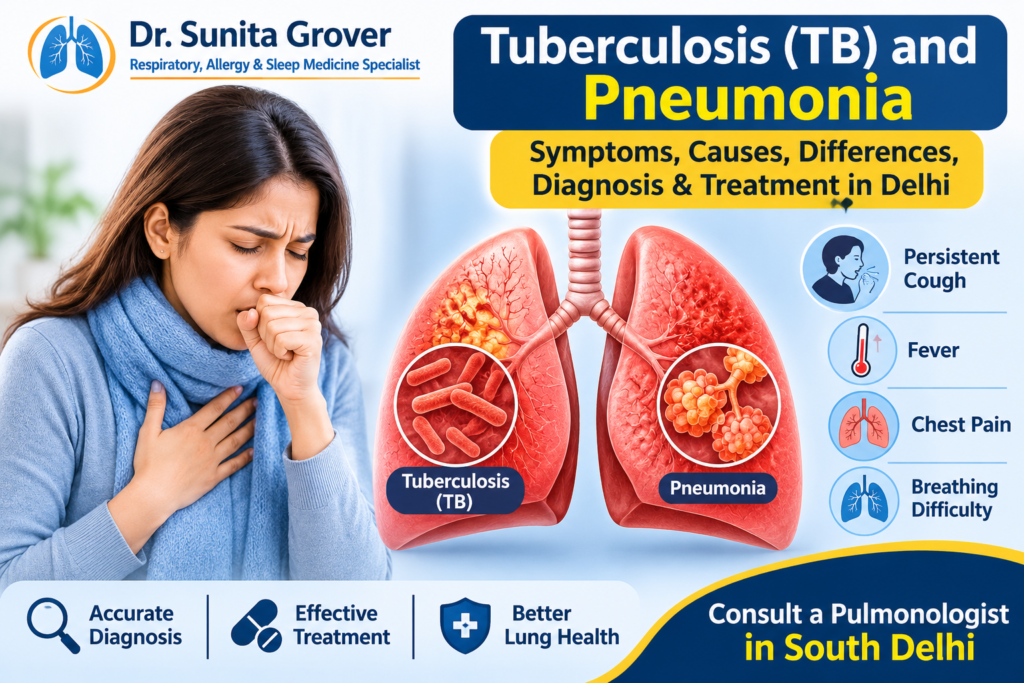
Respiratory conditions such as Tuberculosis (TB) and Pneumonia can affect lung function, breathing and overall health. Both conditions may cause persistent coughing, fever, chest discomfort and breathing difficulties, but their causes, progression and treatment approaches are different. If you are searching for a Pulmonologist in South Delhi, understanding these conditions can help you recognise warning signs and seek appropriate medical attention. Early diagnosis and proper medical management play an important role in preventing complications and supporting recovery.
What Is Tuberculosis (TB)?
Tuberculosis (TB) is an infectious disease caused by a bacterium called Mycobacterium tuberculosis. It most commonly affects the lungs but can also involve other organs, including the kidneys, bones, lymph nodes and brain.
TB spreads through the air when a person with infectious pulmonary TB coughs, sneezes or speaks. Common symptoms include:
- Persistent cough lasting two weeks or longer
- Coughing up blood or mucus
- Chest pain
- Unexplained weight loss
- Fever and night sweats
- Weakness, fatigue and loss of appetite
TB can be cured with appropriate medication and medical supervision. Completing the prescribed treatment is essential to prevent relapse and drug resistance.
What Is Pneumonia?
Pneumonia is an infection that causes inflammation in one or both lungs. It affects the tiny air sacs called alveoli, which may fill with fluid or pus and make breathing difficult.
Pneumonia can be caused by bacteria, viruses or fungi. Its severity varies from mild illness to a serious infection requiring hospitalisation.
Common symptoms include:
- Cough with or without mucus
- Fever and chills
- Shortness of breath
- Chest pain while breathing or coughing
- Fatigue and weakness
- Rapid breathing
- Confusion, particularly in older adults
Older adults, young children and people with weakened immunity or existing medical conditions may have a higher risk of severe pneumonia.
Difference Between TB and Pneumonia
Although both conditions affect the lungs, they differ in their causes, symptoms and treatment.
| Feature | Tuberculosis (TB) | Pneumonia |
|---|---|---|
| Cause | Mycobacterium tuberculosis | Bacteria, viruses or fungi |
| Onset | Usually gradual | Often develops over days |
| Cough | May persist for weeks | Can develop suddenly |
| Fever | May be prolonged | Often accompanied by chills |
| Weight loss | Common in active TB | Not a typical defining symptom |
| Treatment | Specific anti-TB medicines | Depends on the infectious cause |
| Transmission | Airborne transmission | Depends on the causative organism |
Understanding the Difference between TB and pneumonia is important because similar symptoms do not necessarily indicate the same disease. Medical evaluation and appropriate investigations are needed to establish an accurate diagnosis.
Causes and Risk Factors of TB and Pneumonia
Certain health and environmental factors can increase the risk of developing respiratory infections.
Common risk factors for TB include:
- Close contact with someone who has infectious pulmonary TB.
- Weakened immune system.
- Diabetes and undernutrition.
- Smoking and poor general health.
Risk factors for pneumonia include:
- Bacterial or viral respiratory infections.
- Smoking and exposure to air pollution.
- Older age and weakened immunity.
- Existing lung, heart or other chronic medical conditions.
Avoiding tobacco, maintaining good hygiene and following recommended vaccinations can help reduce the risk of certain respiratory infections.
TB and Pneumonia Treatment in Delhi: Consult an Experienced Pulmonologist
Patients looking for TB and Pneumonia Treatment in Delhi should consult a qualified respiratory specialist for accurate diagnosis and appropriate medical care. Treatment depends on the type of infection, its severity and the patient’s overall health. Dr. Sunita Grover evaluates respiratory conditions and recommends suitable investigations and treatment plans based on individual patient needs.
How Are TB and Pneumonia Diagnosed?
Accurate diagnosis helps doctors identify the underlying infection and recommend appropriate treatment.
Depending on the patient’s symptoms and medical history, a pulmonologist may recommend:
For Tuberculosis:
- Sputum examination.
- Rapid molecular tests such as CBNAAT or Truenat, where indicated.
- Chest X-ray.
- Drug-resistance testing when required.
For Pneumonia:
- Physical examination and lung auscultation.
- Chest X-ray when clinically indicated.
- Blood investigations.
- Sputum examination in selected cases.
- Oxygen saturation measurement.
Not every patient requires all these investigations. The appropriate tests depend on clinical findings and the suspected infection.
Treatment Options for Tuberculosis and Pneumonia
Treatment depends on the confirmed diagnosis, infection severity and the patient’s overall health.
Tuberculosis Treatment: Active TB generally requires a combination of specific anti-TB medicines taken for the prescribed duration. Patients must complete the treatment and attend recommended follow-up appointments. Stopping medication without medical advice can increase the risk of drug resistance and treatment failure.
Pneumonia Treatment: Treatment depends on the organism responsible for the infection. Bacterial pneumonia may require antibiotics, while certain viral infections may need antiviral medication. Severe pneumonia may require hospitalisation, oxygen support and other medical interventions.
Patients seeking Tuberculosis treatment in Delhi or Pneumonia treatment in Delhi should consult a qualified respiratory specialist for appropriate diagnosis and an individualised treatment plan.
When Should You Consult a Pulmonologist?
Consult a respiratory specialist if you experience a persistent cough, recurring fever, unexplained weight loss, chest pain or difficulty breathing.
Seek emergency medical attention if you experience severe breathlessness, bluish lips, confusion, significant chest pain or coughing up blood.
Meet Dr. Sunita Grover – Respiratory, Allergy & Sleep Medicine Specialist
Dr. Sunita Grover is a Respiratory, Allergy & Sleep Medicine Specialist with over 15 years of experience in diagnosing and managing lung, respiratory, allergy and sleep-related conditions.
Her qualifications include:
- MBBS: Sawai Man Singh Medical College, Jaipur (SMS College), 2009.
- MD Respiratory Medicine: Government Medical College, Kota, 2013.
- FSM: Fellowship in Sleep Medicine from the Indian Society for Sleep Research (ISSR).
Her clinical areas of focus include asthma, COPD, pneumonia, tuberculosis, chronic cough, sleep apnea and allergy-related respiratory conditions.
Patients looking for a Pneumonia doctor in South Delhi or a TB specialist in South Delhi can consider consulting an appropriately qualified respiratory specialist for clinical evaluation and treatment guidance.
Respiratory Consultation in South Delhi
Patients from Kalkaji and other parts of South Delhi experiencing persistent respiratory symptoms should seek timely medical evaluation. Identifying the cause of a lung infection, selecting appropriate investigations and following a suitable treatment plan are important steps towards better respiratory health.
Dr. Sunita Grover provides specialist consultation for respiratory, allergy and sleep-related conditions. Patients can seek medical guidance for symptoms associated with pneumonia, tuberculosis and other lung disorders.
Frequently Asked Questions (FAQs)
1. Can tuberculosis and pneumonia have similar symptoms?
Yes. Both can cause cough, fever, chest discomfort and breathing difficulties. Appropriate medical investigations help distinguish between them.
2. Is tuberculosis completely curable?
Yes. Most drug-susceptible TB cases can be cured with the correct medicines and completion of the prescribed treatment.
3. How long does pneumonia take to recover?
Recovery varies depending on the infection, its severity, the patient’s age and overall health. Some patients recover within a few weeks, while others need longer.
4. Can pneumonia turn into tuberculosis?
No. Pneumonia does not turn into TB. They are separate diseases caused by different infectious organisms, although both conditions can occur in the same person.
5. When should I consult a lung specialist?
Consult a pulmonologist if you experience a persistent cough, recurring respiratory infections, unexplained fever, chest pain or breathing difficulties.
Conclusion
Tuberculosis and pneumonia are different respiratory conditions that require accurate diagnosis and appropriate treatment. Recognising their symptoms early, undergoing recommended investigations and following medical advice can help prevent complications and support recovery.
If you are experiencing persistent respiratory symptoms, consult a qualified respiratory specialist for a proper medical evaluation. Taking timely care of your lung health can make an important difference to your overall well-being.